Hodi? Pinda.
Come into the world of code. 4,000 working snippets in Python, HTML, CSS and JavaScript, and a free course that takes you from your first line to your own AI web app.
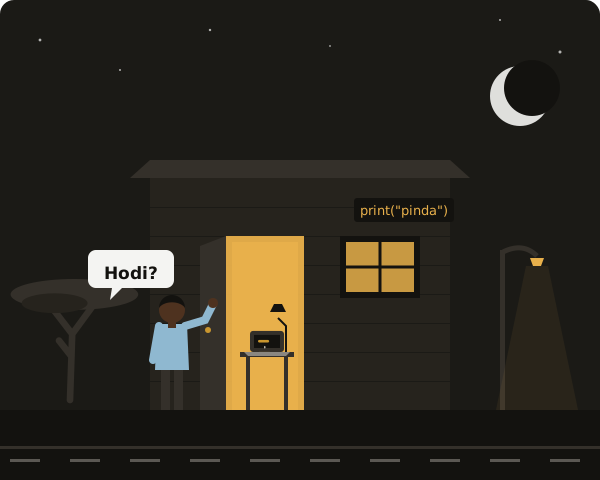
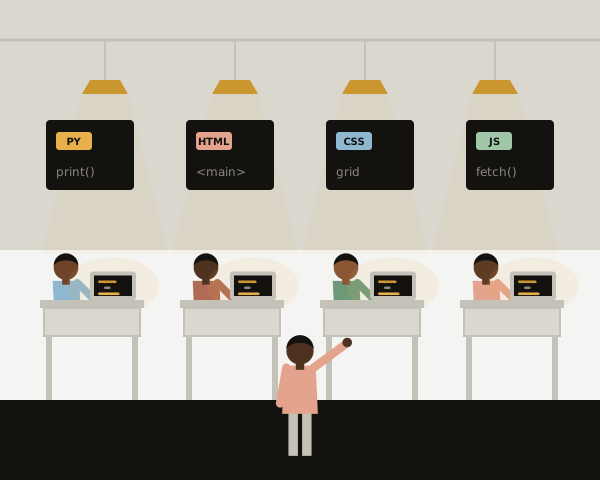
Four languages, one library
A thousand snippets in each, sorted into drawers, one workbench per language.
Fixes people reach for first
Stuck at eleven at night? Start here.
From novice to junior full-stack developer
Eight modules. About 258 hours. Six months at ten hours a week.
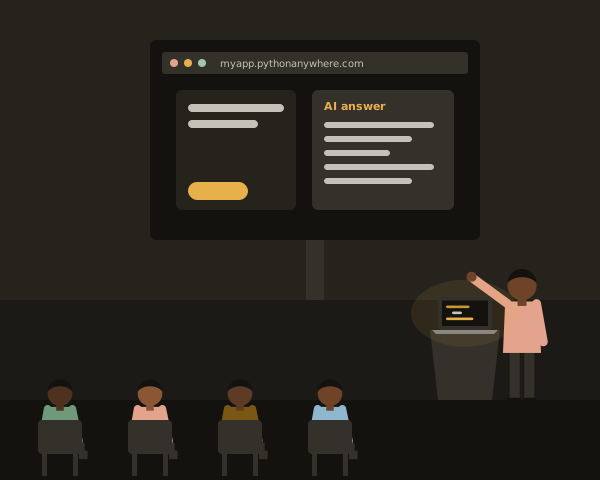
The course starts with installing the tools and ends with you shipping an AI-enabled web app at a real address: Python and Flask behind it, HTML, CSS and JavaScript in front of it, and an AI model doing the thinking. Every module states its level, its hours and what you will be able to do.
Free. For everyone. For good.
Knowledge that sits behind a paywall helps nobody in Maun, Mutare or Mongu. Pinda gives it away.
There is no account to open and nothing to pay. Pinda is a programme of the Kufunga Foundation, built for learners across Southern Africa and open to anyone who knocks.
How Pinda works
Snippets at the front door. The course in the back room.
Most people do not learn a language cover to cover. They learn what solves today's problem, then come back for more. Pinda is built for both: the quick fix and the full course.
Pick a language, then type what you are trying to do in plain words: read a csv, centre a div, format a phone number, call my AI endpoint. Pinda searches titles, descriptions and the code itself.
Every snippet has Copy and Download buttons that give you a ready .py, .html, .css or .js file. Want a whole language? The library hands it over as one text file.
Snippets are short and complete. For most Python and JavaScript snippets you can open the output first, so you know exactly what you should see.
Behind the snippets sits an eight-module course, about 258 hours, that ends with your own AI web app. Start at module one.
Solved something the library does not have yet? Send it in. No account, just a code to your inbox.
Give a snippet back
The library grows when Southern African developers add what they know.
Send in code that solved a real problem, in any of the four languages. It goes onto the community shelf with credit to you.